Description
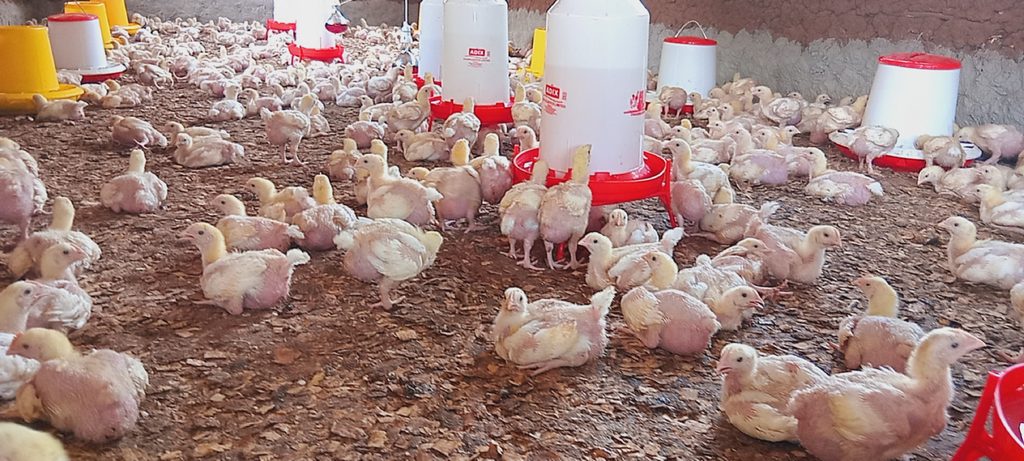
A member of one of the teachers’ families operates a small-scale poultry business on the school grounds. Chicks are purchased at approximately one week old and raised for four weeks until they reach market weight as broiler chickens. This activity provides a reasonably profitable source of additional income for the family.
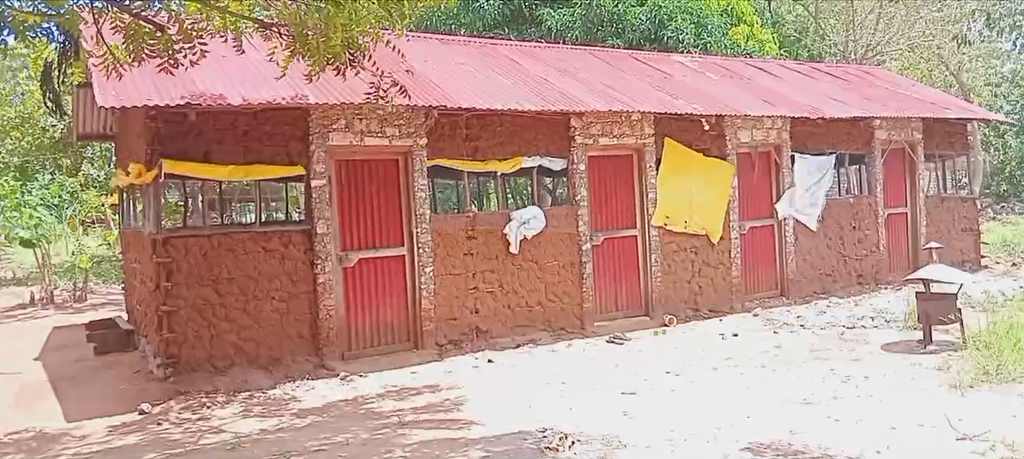
There is also a larger building on the school premises that, until recently, was occupied free of charge by a family as a residence. Due to the development of the vegetable garden and the construction of a perimeter fence, the building was vacated in August 2026. The structure, built as temporary accommodation from wood and clay and fitted with a corrugated iron roof, had originally been earmarked for demolition to make way for the expansion of the garden.
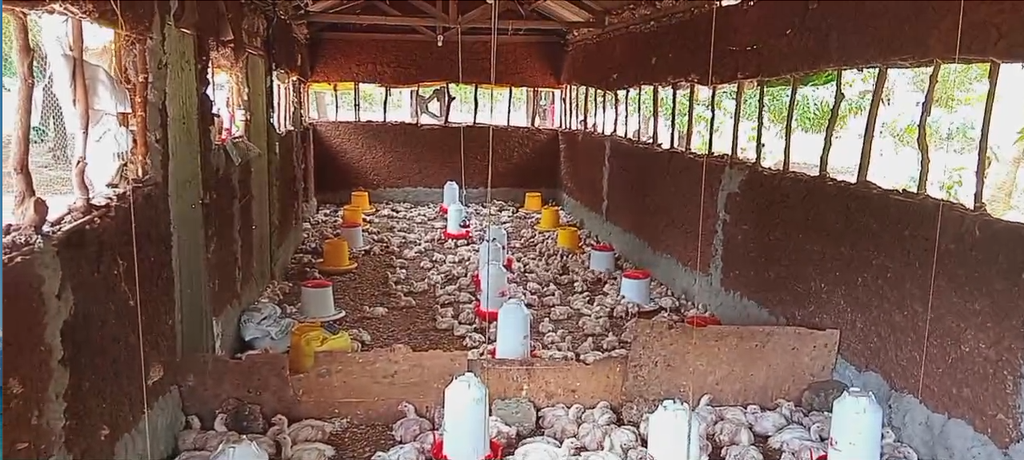
After consultation, it was decided to give the building a new purpose by converting it into a facility for raising broiler chickens. The necessary expertise and sales contacts are provided by James Toya, the husband of teacher Rita Toya.
As the school is currently facing significant challenges in paying teachers’ salaries, it was decided to establish this project with a one-time investment from the Foundation. The aim is to create a sustainable source of income that will enable the monthly purchase of new chicks and feed from the proceeds of the poultry operation. The remaining profit can then be used to help fund teachers’ salaries and support the school’s long-term financial sustainability.
Needs
- Renovation and adaptation of the existing building for use as a poultry house:
- Replacement of the front gable wall
- Improvement of ventilation
- Installation of a concrete floor
- Application of a cement finish to the lower sections of the walls
- Installation of chicken wire and rain protection
- Construction of a “hot room” for brooding chicks during their first week
- Purchase of 500 one-week-old chicks
- Purchase of feeding and drinking equipment
- Purchase of charcoal heating equipment for use during the first week
- Purchase of medicines and vaccines for the first two production cycles
- Community involvement is essential to the success of the project.
Current status
The project started in October 2026 with the purchase of chicks and the necessary equipment. During the initial phase, the chicks were housed in a temporary poultry shed belonging to James. At the same time, renovation and improvement works were carried out on the permanent poultry house to prepare it for accommodating the birds after their first week. All construction and renovation work has now been completed. The chickens have been transferred to their permanent housing, where they continue to grow under suitable conditions.
Joseph arranged the necessary operating permit, providing assurance to customers that the chickens are being raised under approved conditions and are subject to government oversight.
Joseph and Michael have been tasked with promoting the project to local restaurants and other hospitality businesses. In addition, James’s existing customer network has been informed of the increased availability of chickens for sale, helping to secure a reliable market for future production.
Impact
The impact of this investment extends beyond the financial benefits it is expected to generate. Stakeholders, including lender Michael Mweni and the teachers, gain greater peace of mind as they can see that concrete steps are being taken to establish a more reliable and sustainable source of income to help fund teachers’ salaries. In this way, the project helps reduce concerns about income insecurity and contributes to greater stability for everyone involved.
The teachers form a highly dedicated and committed team. Several of them could easily find employment at other schools where income security would be greater. However, thanks to their commitment to the children and the school, they have chosen to remain. It is therefore essential to retain these valuable staff members and provide them with greater financial stability.
This project is expected to play an important role in achieving that goal by creating an additional source of income that supports both the teachers and the long-term sustainability of the school
Financial
Executed in September/October 2026
| Description | Total in KES | Remarks |
| 500 chicks | 56.000 | |
| Food: Starter | 67.500 | 1st 2 weeks |
| Food: Finisher | 72.000 | 2nd 2 weeks |
| Floor: Wood chips | 3.200 | |
| Charcoal | 2.400 | 1st week |
| Medicines | 5.000 | For 2 batches od chickens |
| Drinkers (one time) | 4.800 | |
| Feeders (one time) | 4.800 | |
| Budget rebuilding barn | 21.900 | |
| Licence (yearly) | 6.000 | |
| Eenmalige investering | 239.900 KES | € 1.685 |
On Average € 1,00 = KES 150, with the cost of exchange and handling fee from banks and MPesa (Kenia mobile banking) the net amount of € 1,00 = KES 142,50 – so we calculate with this rate.
Pictures